
If you want to add more natural light, improve your view, and give your home a little extra character, bay and bow windows are two great options. While they may look similar at first glance, their design and overall appearance are noticeably different.
What Is a Bay Window?
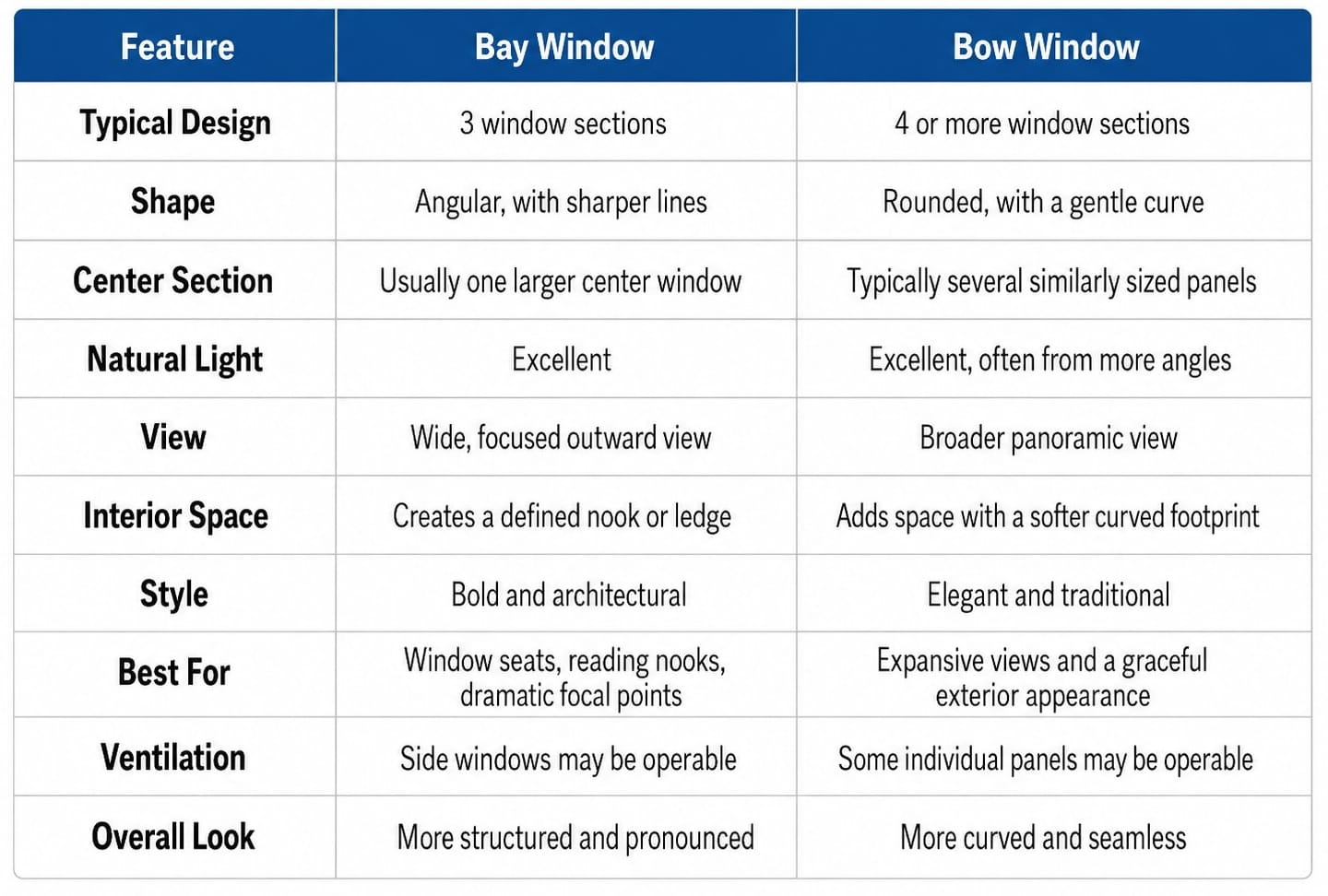
A bay window typically consists of three sections: a larger center window with two smaller windows positioned at an angle on either side. This creates a more defined, angular shape that extends outward from the home.
Because of this projection, bay windows can also create useful interior space. Depending on the room, that extra area can become a window seat, reading nook, breakfast area, workspace, or simply a place to enjoy a better view.
What Is a Bow Window?
Bow windows have a softer, curved appearance. Rather than using three sharply angled sections, they typically feature four or more window panels arranged to form a gradual arc.
The additional glass can make bow windows especially appealing for homeowners who want expansive views and plenty of natural light. Their rounded exterior profile can also add an elegant architectural feature to the home.
Bay vs. Bow: Which Should You Choose?
The best option depends largely on your home and your goals. Choose a bay window if you prefer a more angular, dramatic look and want to create a defined interior nook. Consider a bow window if you prefer a graceful curved appearance, a wider view, and plenty of glass.
Both styles can brighten a room, improve views, provide ventilation when operable windows are included, and create additional usable space.
Comparing Bay Windows vs. Bow Windows
Upgrade Your View
Whether you choose a bay or bow window, the right window design can completely transform a room. Consider your available space, architectural style, desired view, and budget before making your decision. A professional window installer can also help determine which configuration will work best for your home.
Frequently Asked Questions About Bay and Bow Windows
1. What is the main difference between a bay window and a bow window?
A bay window usually has three window sections and a more angular shape, while a bow window typically has four or more sections arranged in a gentle curve.
2. Which lets in more natural light: bay or bow windows?
Both styles provide plenty of natural light, but bow windows may allow light to enter from more angles because they use multiple glass panels.
3. Do bay windows add more interior space?
Bay windows often create a more noticeable interior ledge or nook because of their angular projection. This space can be used for seating, storage, plants, or décor.
4. Are bow windows larger than bay windows?
Bow windows are often wider because they use four or more window sections, although the final size depends on the opening and the home’s design.
5. Which window style provides a better view?
Both provide expansive views. Bow windows tend to create a wider, more panoramic view, while bay windows provide a strong outward-facing focal point.
6. Can bay and bow windows be opened?
Yes. Depending on the design, certain sections can include operable windows such as casement or double-hung windows to provide ventilation.
7. Are bay or bow windows energy efficient?
They can be energy efficient when properly installed and equipped with quality insulated glass, weatherstripping, and energy-efficient frames.
8. Which costs more, a bay window or a bow window?
Bow windows may cost more in some installations because they generally include more individual window panels. Pricing also depends on size, materials, glass options, and installation requirements.
9. Can bay or bow windows replace a standard window?
In many homes, yes. However, enlarging an existing opening or adding a projecting window may require structural modifications, so professional evaluation is recommended.
10. How do I choose between a bay window and a bow window?
Choose a bay window if you prefer a bold, angular appearance and a defined interior nook. Choose a bow window if you want a softer curved look, additional glass, and a panoramic view.
SCHEDULE YOUR FREE CONSULTATION
Author: Abel Bastida

